Published: 2024-05-20 · 5 min read
The Secret Life of the Coffee Cherry
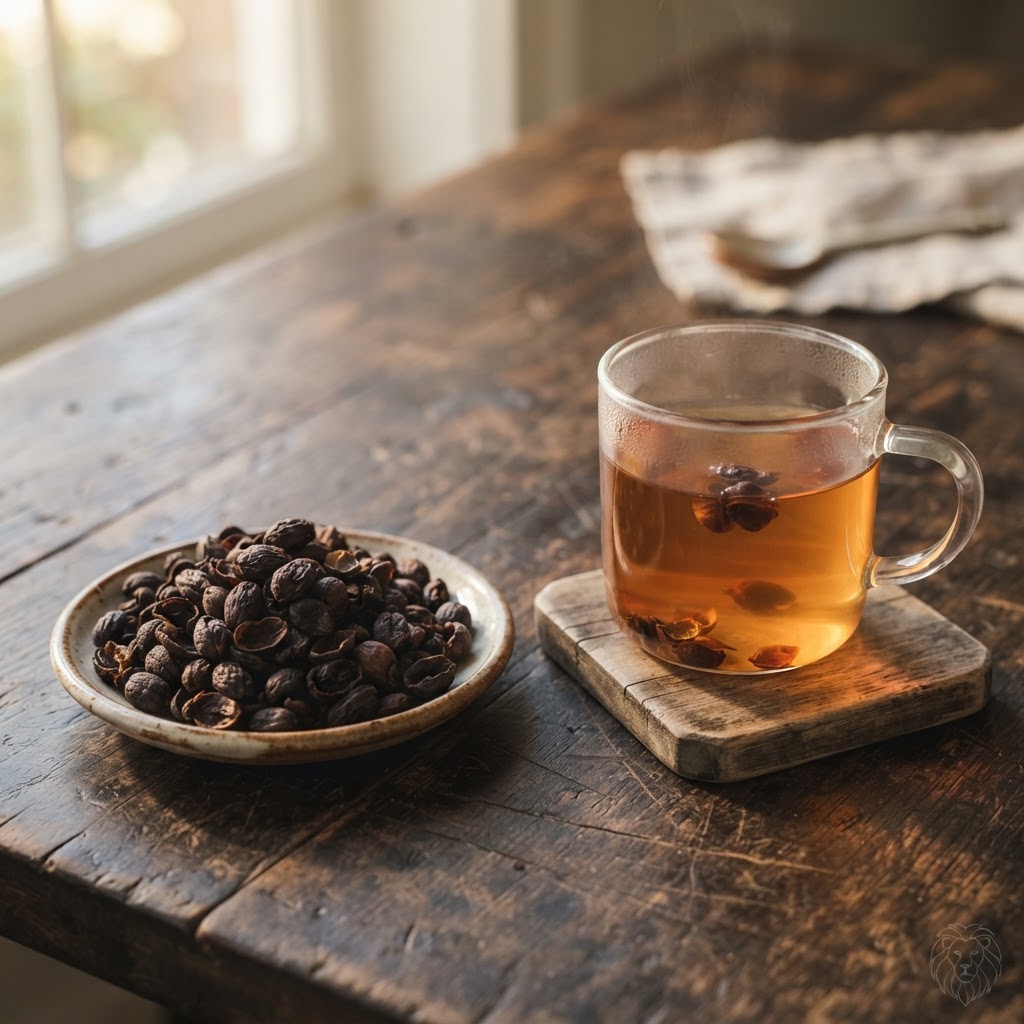
When you walk into a specialty café, the focus is almost always on the roast, the grind, and the extraction. Yet, beneath the familiar aroma of toasted beans lies a forgotten part of the coffee story. I am talking about cascara. The word itself comes from Spanish, simply meaning the ‘husk’ or ‘shell’ of the coffee cherry. For centuries, this fruit skin was treated as a byproduct, yet history suggests it may have been the very first way humans enjoyed the energy of the coffee plant.
While we obsess over the perfect brew today, early humans likely interacted with the plant in a far more primal way. Rather than roasting seeds, they likely chewed the ripe coffee cherry or pounded the fruit and pulp with animal fat to create a portable energy snack. This changes our entire perspective on coffee history; it suggests that our favorite beverage began as a fruit-based infusion for survival, not a ritual centered around roasted seeds.
A History Hidden in Plain Sight
Why don’t we hear more about cascara in the history books? The answer is as simple as it is unfortunate: class. Because cascara was primarily consumed by laborers and peasants who used every part of the harvest to stay fed, it was rarely recorded in the diaries or ledgers of the social elites. It was the food of the people, not the luxury of the wealthy, and thus, it largely vanished from the written record.
📜 History Note
Cascara was historically discarded during coffee processing because it was viewed as waste, yet the people working the fields knew its value as a sweet, energizing infusion long before it reached the global market.
In The Complete World of Coffee, I cover this transition in greater depth, but it is important to recognize that the move toward roasting coffee beans shifted our global culture away from the fruit itself. We traded the sweetness and acidity of the cherry for the roasted profiles of the bean. Now, we are finally seeing a resurgence of interest in this ‘forgotten’ component as baristas rediscover its unique character.
Cascara vs. Coffee Bean: What is the Difference?
To understand why cascara is so unique, it helps to compare it to the roasted coffee we drink daily. The chemical composition is entirely different, leading to vastly different brewing outcomes.
| Feature | Roasted Coffee Bean | Cascara |
|---|---|---|
| Origin | The endosperm of the seed | The dried skin of the cherry |
| Flavor Profile | Roast-driven, bitter, nutty | Fruit-forward, floral, sweet |
| Caffeine | High | Lower |
| Primary Use | Brewed drink | Tea-like infusion |
Brewing cascara is more akin to preparing a loose-leaf tea than a standard drip coffee. You aren’t chasing the same extraction yield or worrying about the same degassing process that you would with roasted beans. Instead, you are steeping the dried skin to draw out natural sugars and fruit acids.
💡 Did You Know?
Cascara contains significant amounts of antioxidants, which makes it not only a delicious alternative to coffee but also a healthy addition to your daily routine.
FAQ
How should I brew cascara at home?
Think of it like a herbal tea. Use a ratio of about 15 grams of cascara per 250 milliliters of hot water. Steep for 4 to 5 minutes, strain, and enjoy. You can even serve it iced for a refreshing summer drink.
Does cascara contain caffeine?
Yes, though it generally contains less caffeine than a cup of brewed coffee. The exact levels depend on the variety and how it was processed, but it provides a gentler, more sustained lift.
What does it taste like?
Unlike the roasted flavor of coffee, cascara is sweet and fruity. Expect notes of hibiscus, rose hips, dried cherry, and honey.
Key Takeaways
- Cascara is the dried husk of the coffee cherry, not the seed itself.
- It is an ancient food source, likely consumed by early humans for energy before roasting became common.
- It was overlooked historically because it was a humble drink for laborers, not the ruling classes.
- Brew it like tea to experience its natural sweetness and fruit-forward character.
Conclusion
Cascara reminds us that the coffee plant is a complex, multi-faceted fruit. By moving past our obsession with the roasted bean, we can appreciate the entire cherry and the long, hidden history of the people who tended these trees for generations. It is a wonderful way to broaden your coffee palate and connect with the origins of the drink we love.
Continue Exploring Coffee
If you enjoyed this article, you’ll find hundreds more pages covering coffee history, brewing science, roasting, processing, sustainability, and specialty coffee inside The Complete World of Coffee.
About Keith E. Lyons
Keith E. Lyons is the author of The Complete World of Coffee, an in-depth guide covering coffee history, science, roasting, brewing, processing, sustainability, and specialty coffee.
Join the Coffee Newsletter
Receive new coffee history articles, brewing guides, book updates, and specialty coffee insights delivered to your inbox.